
Effin Ineffable
for the cool cats

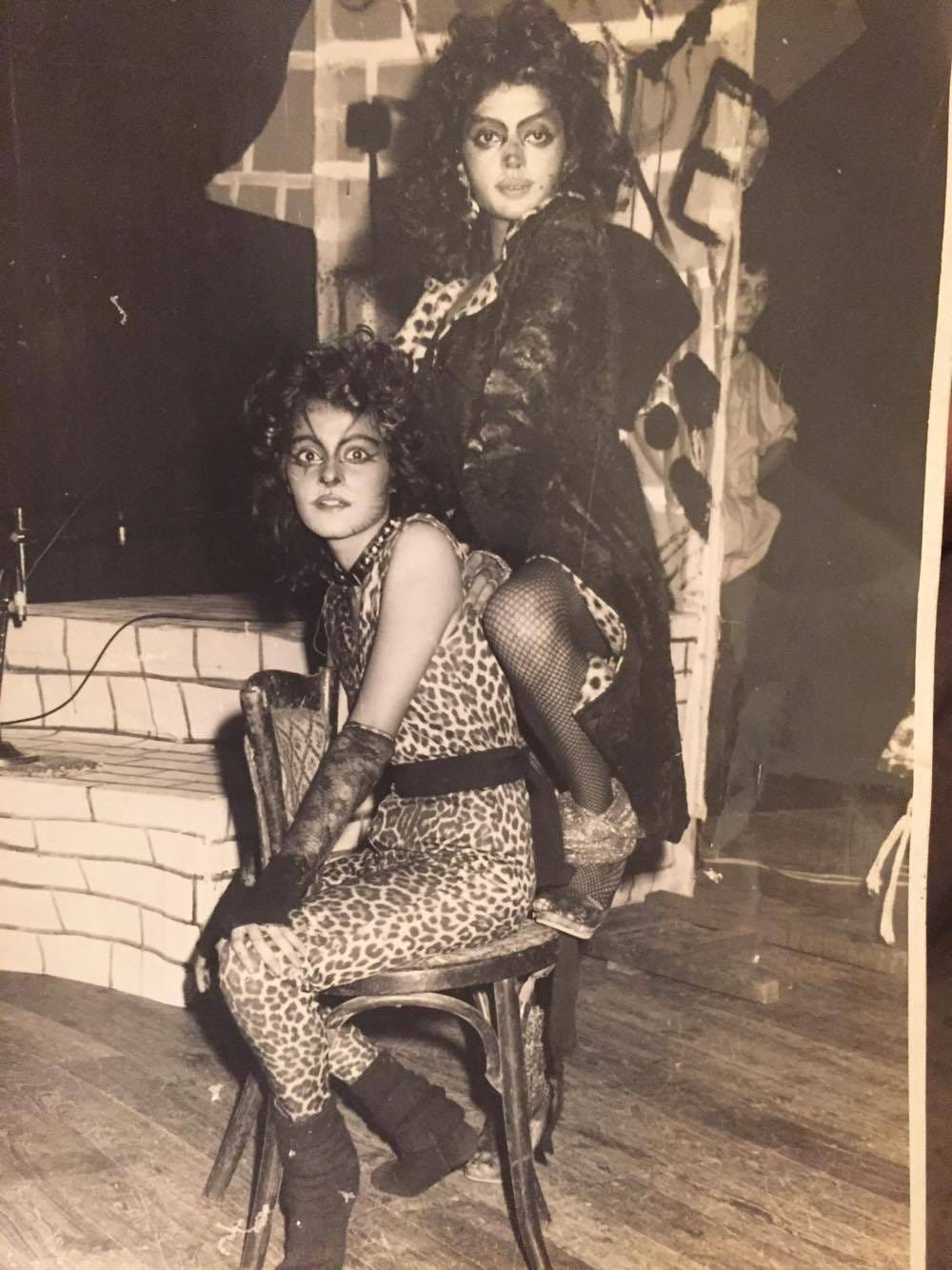
Pervin Varkey and me - CATS 1985
[I wrote this around 2020 as a Facebook Note. But I’m migrating it here, since FB Notes have gone the way of the dodo. Also because, in May 2026, Kevin Oliver has a new musical in town - his very own, Odyssey of Love: The Tale of Shakuntala. Read his interview below.]
*
Sometime 1985-ish, Kevin Oliver wrapped this writer in aluminium foil and a black leatherette mini, had her hanging out of the newly constructed glass elevator in what is now called Le Meridien and shot a music video of her singing Tina Turner’s We Don’t Need Another Hero for Doordarshan Kendra, Bangalore. Yes, for Doordarshan. All of 32 years ago. Back in loosey-goosey Bangalore Cantonment* that birthed many mavericks and other souls willing to walk down roads less taken.
Shortly after, we, a motley crew including Pervin Varkey, Chris Mendens, Denise Bartley amongst approximately 25 others, began rehearsals for Andrew Lloyd Webber’s CATS in Prasad Bidapa’s old Design & Print Group offices at #1 MG Road. Kevin, directing and Prasad, producing and choreographing. The last time I had been in a musical was when Ashok Mandana directed Gilbert and Sullivan’s HMS Pinafore at Sophia High School, so this was all kinds of wonderful.
I was stunned to be cast as the lead, Grizabella. What finer romance than to play an old whore. To sing “Burnt out ends of smoky days, the stale cold smell of morning” and revel in the meaning of the words. Singers, dancers, designers, models, photographers, musicians all made that wooden mezzanine at #1 MG Road ring. Roberto Narain was playing drums, Ramon Ibrahim, keyboards, Nicholas Furtado, lead guitar and Kenneth Beale, bass. Sweaty days and nights of poetry, learning songs off cassettes that were paused and rewound to death, too many cigarettes, steam inhalations and cheap brandy, singing for Prasad’s fashion shows, dancing at the legendary disco Knock Out and borrowing feathers and fishnets for our upcoming shows in Bombay.
After CATS, Prasad and Judith Roby went on to an even more ambitious project – mounting Lloyd Webber’s Starlight Express at Gurunanak Bhavan. Ramps were built, the singers all became skaters and dancers as well. Pervin was the music director and played the lead, Pearl, Judy directed. The Pakistani cricketer, Imran Khan was the chief guest and loved the show, which went on to be an enormous hit. They managed this feat, thanks to the existing strong tradition of choral singing, passion and a mere fraction of what is spent on even a small sized production today.
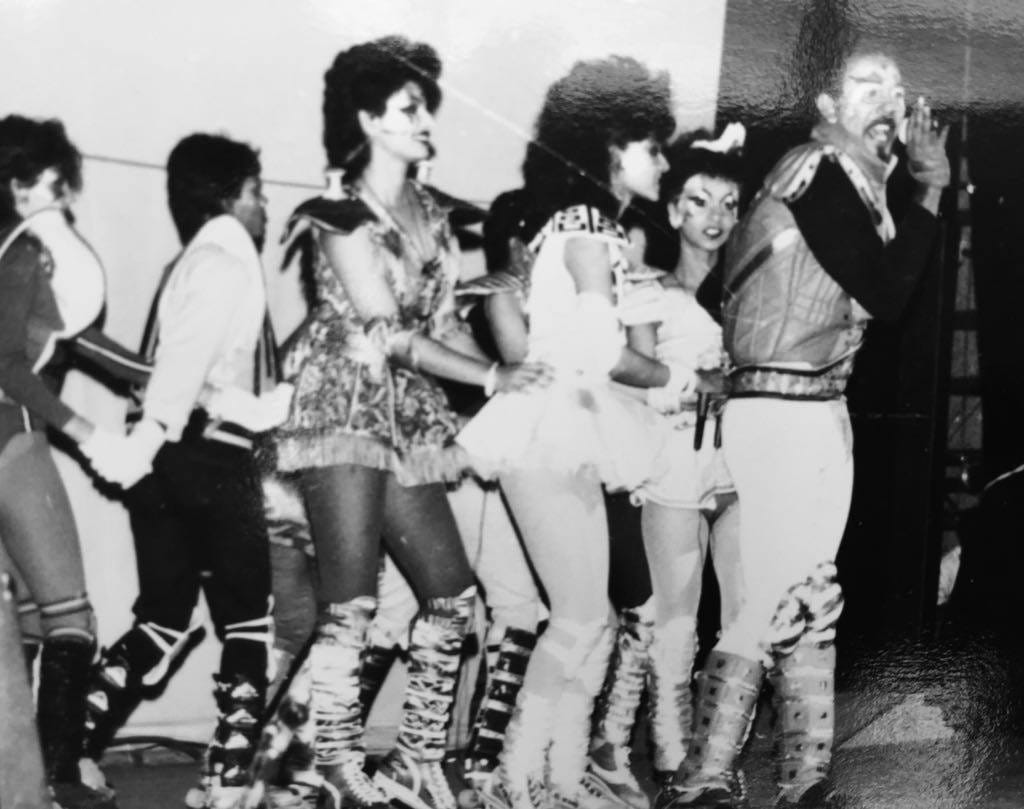
Starlight Express: Jill Sequeira, Pervin Varkey, Denise Bartley, Dheena Chandra Das
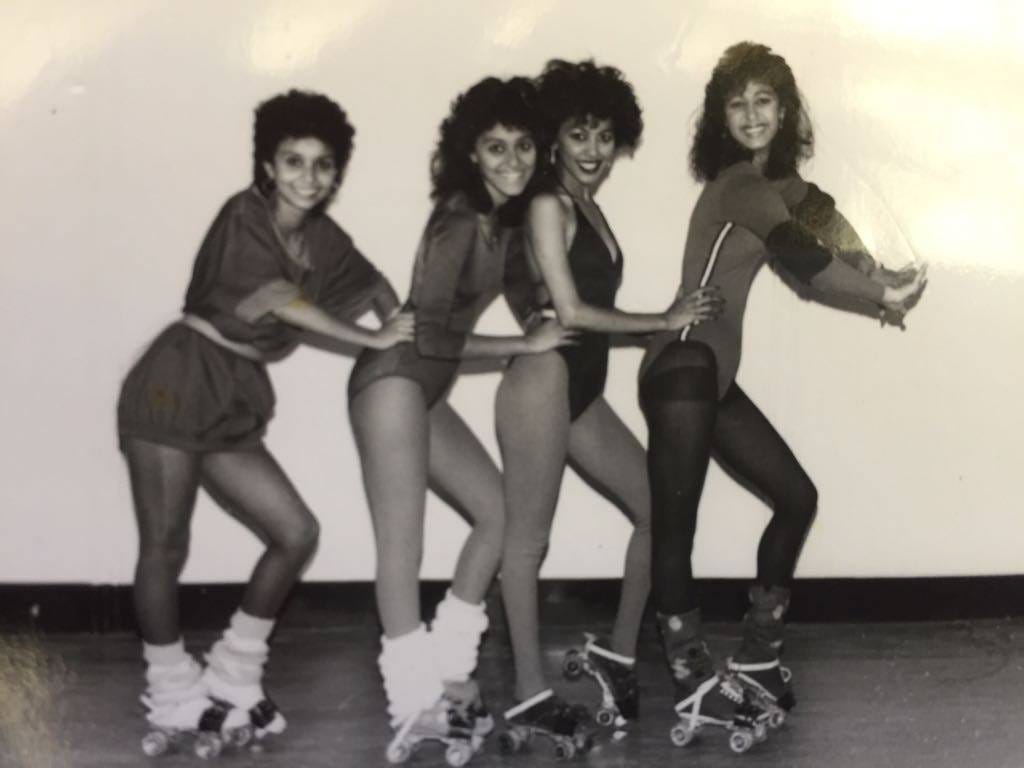
Denise Bartley, Pervin Varkey, Anitha Saran, Jackie Kelley
At that time, musicals were closer in form and impulse to caberet (Talk of the Town on Racecourse Road, Basco’s on Brigade Road and Three Aces on MG Road were well known for their caberet) than to anything local or indigenous. Ascension to culturatti/cognoscenti lists was only possible if you worked in genres that the government supported or considered art-worthy - ie local language theatre, ‘roots theatre’, folk theatre, classical arts and so on. In retrospect, more is the pity. Alchemical changes were taking place in gender relations and post-colonial identities thanks to the western music wave in the Cantonment, and consequent challenge to conformity and the social status quo. Young people mingled freely across caste, class and religion bringing a new heterodoxy to the mix. Opportunities to socialize were ample because of the diversity of the Cantonment demographic, openness of parks, access to public spaces as well as the community driven fun of jam sessions at church bazaars and school fetes. Music was understood to have broken with tradition and now part of a larger picture that directly involved youth: an anti establishment wave that would contribute to a paradigm shift in modern history. From anti-nuclear demonstrations to the Vietnam war to the formation of Bangladesh, musicians were critiquing the times. So when, for instance, Gopal Navale from Malleswaram sang the Dead’s Ripple in Cubbon Park in 1979, it was because he felt the repercussions, the ripple, and was responding to and participating in a global phenomenon. The same impulse led him to start the Hundi Rock series and Freedom Jam. As Sudhir Desai, Head of Strategy and Foresight at Shrishti Institute of Art, Design and Technology observed, none of these people became any less ‘Indian’ from these western encounters, if anything they were navigating ideas of liberalism and cosmopolitanism in a local construct. Similarly, Bangalore based feminist activist and researcher Madhu Bhushan recently said “ If only the City had then been open to a conversation with the Cantonment that was engaging with the subversive “hippy” culture of the west, it would perhaps not have been consumed by mass globalised western culture the way it is today.” Perhaps. At least the consumption would be more informed.
So, before the last bungalow comes down and the last road is renamed to obliterate any signs the Cantonment, it’s fitting to pay homage to those one learned the most ineffable lessons from. Lessons that don’t have a name but open doors, poke holes in the ego and make one more porous about identity and sexuality. Amartya Sen famously rejected the “presumption that we must have a single - or at least a principal and dominant - identity” and recognised that “conflict and violence are sustained today, no less than the past, by the illusion of a unique identity.” No person is any one thing, but in fact a flowing and changeable figment of the imagination as self-viewed through multiple lenses including class, gender, orientation, passions, profession, likes/dislikes, language, morals or politics. We live in times where identity is taking centre stage and in liberal spaces we pay lip service to recognising the inherent dangers of this. Intellectually. But what of the heart and creative process? What those Cantonment encounters did, perhaps unwittingly and inadvertantly, was mess entirely with the idea of a formed, impermeable identity. There was no option, really, because using the English language and being “western influenced” illegitimized one in the eyes of the Indian establishment.
But being an outsider, as all existentialists know, has many advantages. The weight of expectation is not heavy, so risks are yours to take. We learned a lot about theatre practice from those people and those days. To cross the lines of culture and upbringing, leap out and enjoy the great unknown. To fly with the unfamiliar, the new and see what comes of it. To sing and dance with body and soul. To take the consequences of failure on the chin. Things can get boxy anywhere and mavericks allow the sun to shine through the cracks. The aluminium foil and playing Grizabella was a life lesson, a veritable PhD in cool.
Addenda
1. 1980’s Bangalore: Contextualizing the times
*Bangalore Cantonment, developed in the early 19th century, was built on colonial lines. Bungalows with gardens prevailed and it was settled by a very diverse population unlike the pete or City which was largely Kannada and Telegu speaking. Large numbers of Tamilian migrants came in, as did people from other states, besides the British who administered their troops from here. Public life centred around South Parade Road (now, MG Road) and all roads took military names, thus Artillery, Brigade, Cavalry, Infantry and so on. The area around South Parade (Shivajinagar and Bangalore East) was, with perfect colonial lack of irony, called Blackpally. Subsequently, the Cantonment sprung a plethora of churches, clubs, bars, cinemas, convent schools, Jesuit institutions and grew independant of the pete. The cultural and social impact of 250 years of the Cantonment cannot be overstated.
The 1980’s were just a decade after the western music revolution of ‘70’s Bangalore. People still remembered the big concerts with local musicians - Moonbeam Maya at Leila Powar’s farm, Weirdo Whirligig at the Bangalore Club, Yali at Ravindra Kalakshetra. Osibisa and the Boom Town Rats had been in town. Shakthi with Larry Coryell (who, passed on recently) at the Sophia’s grounds and later with John McLaughlin at Webb’s Garage. Sunbeam Motha had started the Music Strip in Cubbon Park. The ‘80’s were the decade we inherited.
2. Interview extracts with Kevin Oliver, Pervin Varma née Varkey and Chris Mendens.

Kevin Oliver
Kevin Oliver - Group Cultural Coordinator-GEMS, Dubai. Show Director. Choreographer. Was first discovered on the Bangalore stage, playing, against character, the nameless hero opposite Princess Ting-a-Ling at St.Germain’s High School. In character, he later turned Herod into a screaming diva in Esther Yates’ production of Jesus Christ Superstar.
- “I grew up in Benson Town. My mother was a music teacher at Francis Xavier’s school and then at Frank Anthony’s and got me started on the piano when I was 4. Musicals started when I was 18 and did a role for Esther Yates (currently, Head of the Department of Performing Arts at Christ University) for the musical Jesus Christ Superstar. She was my mentor and greatly influenced my choices and the path that I then followed. My first musical was Joseph and the Amazing Technicolor Dreamcoat. My musical mentors were 2 wonderful Bangalore musicians - Christine Colaco and Gladys Mohanraj”
- “In Bangalore in the 70’s, it was really difficult to get a break. I was influenced by Arjun Sajnani and Ashok Mandana. Watching EQUUS which was Ashok’s production (Konarak played the lead, Alan Strang), gave me goosebumps and I so wanted to act at that time. Just wonderful days.....”
- “It was ground breaking in the mid ‘80’s, the music videos I made for Doordarshan. They have repeated them so often. The program was called Noon Lights and produced by a far thinking woman - I think her name was Sarojini. You were part of two of them. Amazing creative freedom produced such glorious visuals. This was when videos for songs were not even produced! Ha ha!”
- “CATS in Mumbai was the ultimate. I thought I had made it. Suddenly, I was a star and the headline in Bombay Times - Bangalore shows Bombay how to do a musical - said it all. Wonderful breakthrough..... I also met Pearl Padamsee and Alyque, who changed my way of thinking, made me think on a much larger canvas”
- “Dubai was my next stop, and it gave me a chance to build a tradition of doing a musical a year. Then I moved to Toronto thinking it would be my big break....... unfortunately it wasn’t..... my scripts were returned to me unopened and it was the most depressing period of my life - creatively. After a period of 4 years I just had to get back to Dubai”
- “Shakuntala was the first full length musical I wrote (here in Bangalore) and even though it took me just 3 months to put 22 songs together, it took a long time before I could stage it properly. And then came the offer, years later, to stage it at the Edinburgh Fringe Festival. I won 4 awards for this production which included one from the Trinity College of Music, London. Now I’m in the process of writing a new pop opera - THE LOST. It opens in Sept 2017. I am truly dying to come back to Bangalore and stage a musical with talent borrowed from the past - some of the present and hopefully the future!”
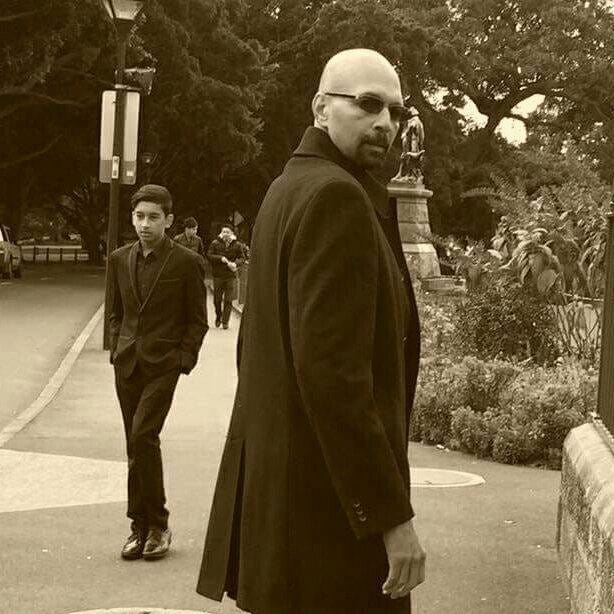
Chris Mendens
Christopher Mendens - Self-confessed Christ College refugee. Still in search of the perfect masala dosai. Hopeless at tennis. Got lost in his way to Tahiti and can now be seen vaguely asking directions up and down Australia’s east coast
- “I was one of the tallest people in Bangalore Cantonment so maybe that’s why I was cast. Many had a choral background (unlike me) so I picked up a different approach to the way I used my voice. Many on the outside were derisive and said I was going gay, but I think they were just jealous because there were so many hot girls there. Also, I met some renaissance types who offered - in addition to the delights of cheap brandy - a thinking process that encouraged opening up to diverse backgrounds, shades, allegories and allusions to most music (not just the score we were working on) and this has, till today, given me what I like to think is a broader, richer approach to music and the arts in general.”
- “Was it the times? Er, no (don’t particularly think the ‘80s were reflectworthy material). I think Kevin, Prasad and Judy were ahead of their time. Just like Savita Yates and Superstar before us, CATS and Starlight Express challenged our town into believing that we could power ahead “Bangalore teaches Bombay how to sing”. I mean, we were a part of that. How great is that? And the ones who were to come stood on the shoulders of giants.”
- “Starlight Express was an even greater leap of faith. To take all that had gone before and make it skate?! We sang, we danced, we raced on skates, we dodged scattering necklace beads. And nary a sprained ankle let alone multiple fractures and contusions. We skated from D&PG to Corner House for lunch, and back again. That beat all the press ads, I think. No one thought those were our times to be contextualised, at least not in any arts/cultural reckoning, all that belonged on the other side of the world, not in South India circa ‘86. If anything so far removed from the mainstream ever happened in Kannada theatre, I don’t know of it.”
- “On the back of my small renown from the musicals I was invited to join BACH (Bangalore Academy Choral conducted by Christine Colaco). In Bangalore secular performing choirs were against the norm, and getting their hands on good scores wouldn’t have been easy. But we were grandly isolated from the mechanics of the thing and all we did was rock up at rehearsals looking debonair and sometimes weaving slightly. We were game for the hours of note-bashing, the dressings-down that we so richly deserved and (for me) the explorations into the realm of the countertenor which confirmed to my gloating enemies that I was by now definitely batting for the other team.”
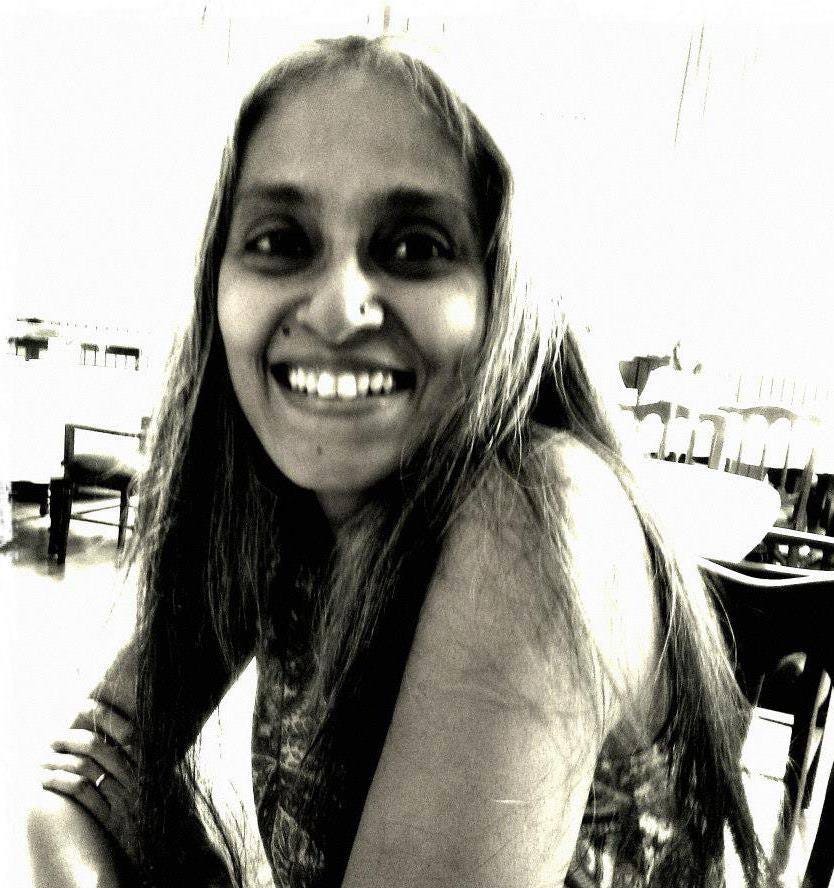
Pervin Varma née Varkey
Pervin Varma - former CEO of CRY and still a trustee. Volunteers with several citizen’s groups including Citizens for Peace. Supporter of all arts and liberal spaces. Hell, yeah, that’s her politics. Conductor of the fabulous Choir of the Loaves and Fish.
- “CATS was just one of the most powerful experiences of my life in so many ways. To hear it all come together, so many voices, harmonies, textures and tones…singing as one. I didn’t realise it then, but my real love and passion for harmonies came from singing in CATS. And perhaps it’s there I discovered my own voice. And this I learnt from Kevin...to find your own sound and give yourself fully to that. He was fearless and had so much courage, both in what he took on and in what he had to endure sometimes to do what he so passionately wanted to do. He was never limited by a score or ‘the right way’ to do something. He went with his imagination. So, if it was 6 part harmonies that he made up on the spot for Jellicle Songs or make Macavity a bluesy rock trio, well that’s what he did, damn the score! And I just loved that sense of surprise and unexpectedness of CATS.”
- “Bombay! Our strange experience at Horizon Hotel!! Singing non-stop on the trains. All the romances and heartbreaks...the laughter....terrified and hanging onto Chris Mendens for dear life as we both understudied you and Dheena Chandra Das in Goa.....Kevin screaming...Judy pregnant and showing the dancers steps...performing for a month on the Sophia’s stage - the Mecca of musicals in India...”
- “Starlight Express. The sheer audacity of the times! For Prasad Bidapa and Judy Roby to do a production that was completely on skates and to pull it off was astonishing. I mean here were 2 of the biggest West End productions, so high on spectacle, being done in Bangalore without one millionionth of the resources. I think musically, in terms of what bands were doing, choirs were doing in Bangalore, there was such an openness to explore, do new things and experiment with new forms and genres.”
- “I discovered a deep love for singing in a way that none of my previous singing experiences had evoked. And I had done a lot of choir and even some solo singing. Perhaps it was being with a whole group of people, who though very diverse, were bound together by a common passion for music, were all discovering life, love and friendship in a time where we lived very intensely in the now. I think we lived with the sense of endless possibilities and boundless freedom.”
- “So, in many ways when you look at Bangalore today, on the surface it seems so much more open. There’s more money and independence for young people, freedom to make career, lifestyle, relationship choices that we couldn’t imagine then....and yet...the freedom to choose, seems to be bound by more narrowly defined notions of who we are and the limitations of the lifestyle that young people wish to have at the start of their journeys. Overall I think society has moved into a more conservative and productive space, where conservative seems to be a desire to ‘make something great again’ without clarity on what that something was and what great is. And productive is best embodied in the ‘time is money’ mantra. In the ‘80s we were still exploring, discovering, without some ‘Golden Age of Chandragupta Maurya’ burden on our shoulders. Or the need to be ‘useful and productive’ members of society at that stage of our lives. Maybe we were the last of the hippy generation for whom exploration and freedom of expression was an article of faith.”
3. The title of this piece - is a play on TS Eliot’s The Naming of Cats.
“When you notice a cat in profound meditation
The reason, I tell you, is always the same
His mind is engaged in a rapt contemplation
Of the thought, of the thought, of the thought of his name
His ineffable, effable, effanineffable
Deep and inscrutable singular name
Name, name, name, name, name, name.”